
Octopus in Dalmatian Cuisine: From the Sea to Our Chef's Table
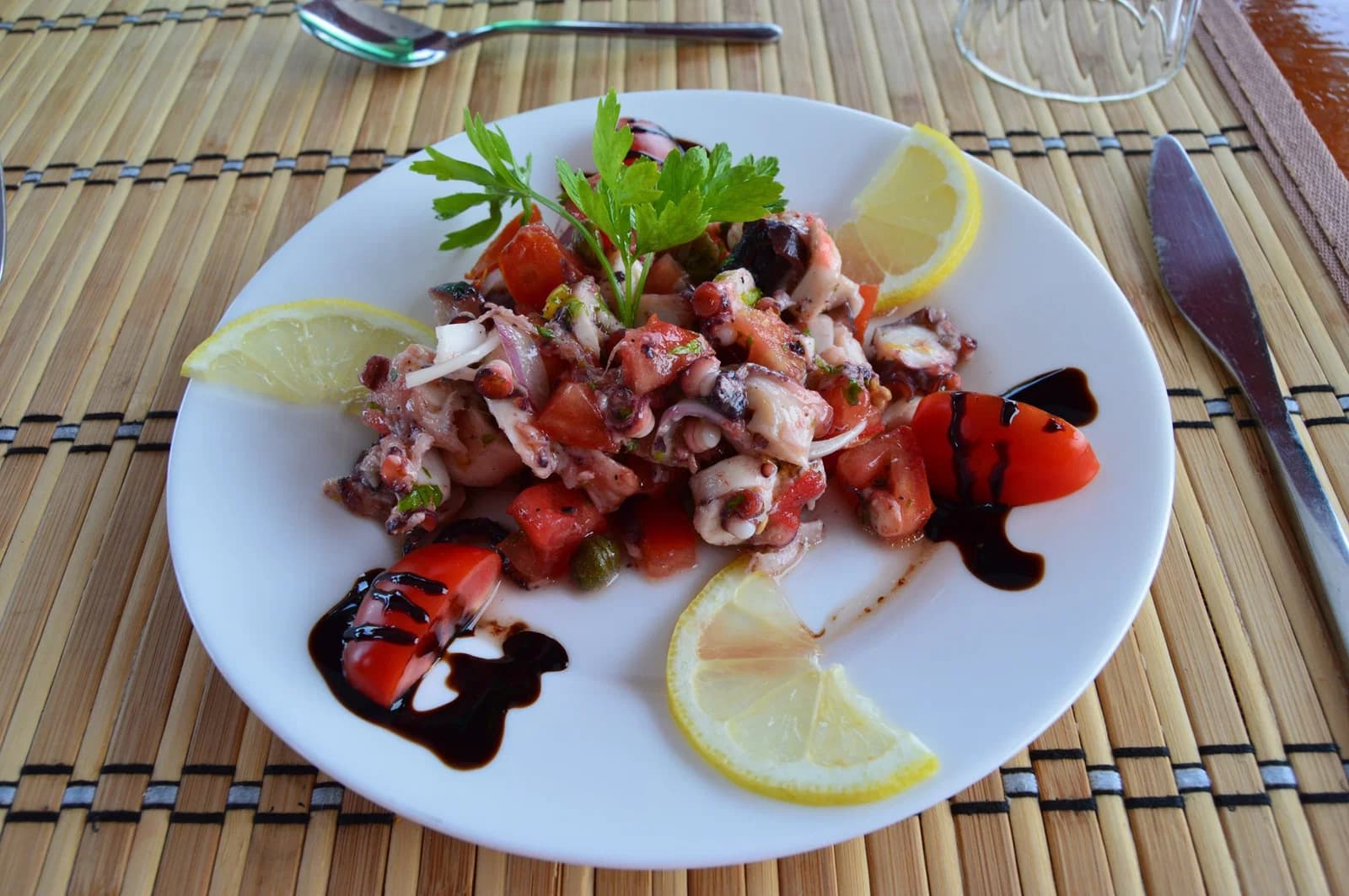
Ask any Dalmatian fisherman to name the catch they respect most and the answer is rarely tuna or sea bass — it is the octopus (hobotnica). Clever, elusive, and famously fussy to cook well, octopus has been part of Adriatic coastal cooking for centuries. On our charters it is one of the dishes guests ask about most, so here is the story behind it.
Octopus Salad: The Taste of a Dalmatian Summer
The classic preparation is octopus salad (salata od hobotnice): tender octopus simmered slowly, then dressed simply with olive oil, wine vinegar or lemon, red onion, capers, and parsley. Some families add boiled potato, others a few cherry tomatoes — every konoba along the coast guards its own version.
The secret is in the cooking, not the dressing. Old Dalmatian wisdom says an octopus must be "frightened" — dipped three times into boiling water before it goes in to simmer — so the tentacles curl and the meat stays tender. Our chef serves it chilled, usually as a light lunch after a morning swim, with home-baked bread to soak up the marinade.
Peka: The Iron Bell Ritual
The most celebrated way to cook octopus in Croatia is under the peka — a heavy iron bell buried in glowing embers. The octopus slowly bakes with potatoes, onions, garlic, white wine, and olive oil for well over an hour, basting in its own juices until it is soft enough to cut with a fork.
Peka is slow food in the truest sense: traditionally you order it hours in advance, and along our routes a handful of family-run konobas in quiet anchorages still prepare it over open fire. Ask your captain — arranging a peka dinner ashore on the right evening is one of the small pleasures of a flexible private itinerary.
A Few Things Worth Knowing About the Octopus
- It is ancient. Octopus fossils predate the dinosaurs — the species has been roaming seas like the Adriatic for over 300 million years.
- It is astonishingly intelligent. With around 500 million neurons spread between brain and arms, an octopus solves problems, opens jars, and learns fast — part of why Adriatic fishermen speak of it with such respect.
- It has three hearts and blue blood. Copper-based blood carries oxygen better in cold water; two hearts serve the gills and one the body.
- It is a master of camouflage. Changing both colour and skin texture in an instant, it can vanish against rock or seagrass — spotting one while snorkelling in a quiet bay is a genuine little victory.
Tasting It On Board
Octopus salad is a regular feature of our chef's menu, prepared with the day's market catch and adjusted to your group's preferences — selected in advance through your food package. If your route and the evening allow it, we will happily point you to a konoba where the peka tradition is alive and well.
Dobar tek — enjoy your meal!
Turn this inspiration into your custom Adriatic route
Share your dates and group preferences. We will send a tailored itinerary and clear weekly quote with no broker fees.
Limited Availability for 2026
About the Author
Captain Ante Mazalin
Born in Dubrovnik and a Master Mariner (>3000 GT), Ante has spent his life navigating the Adriatic. As the owner-captain of Adriatic Holiday, he shares his passion for history, cuisine, and the hidden bays of Croatia with guests from around the world.
Read Full BioPlanning a similar route?
Get your private quote and route recommendation
We will help you choose the right week, best embarkation port, and itinerary pace for your group.