
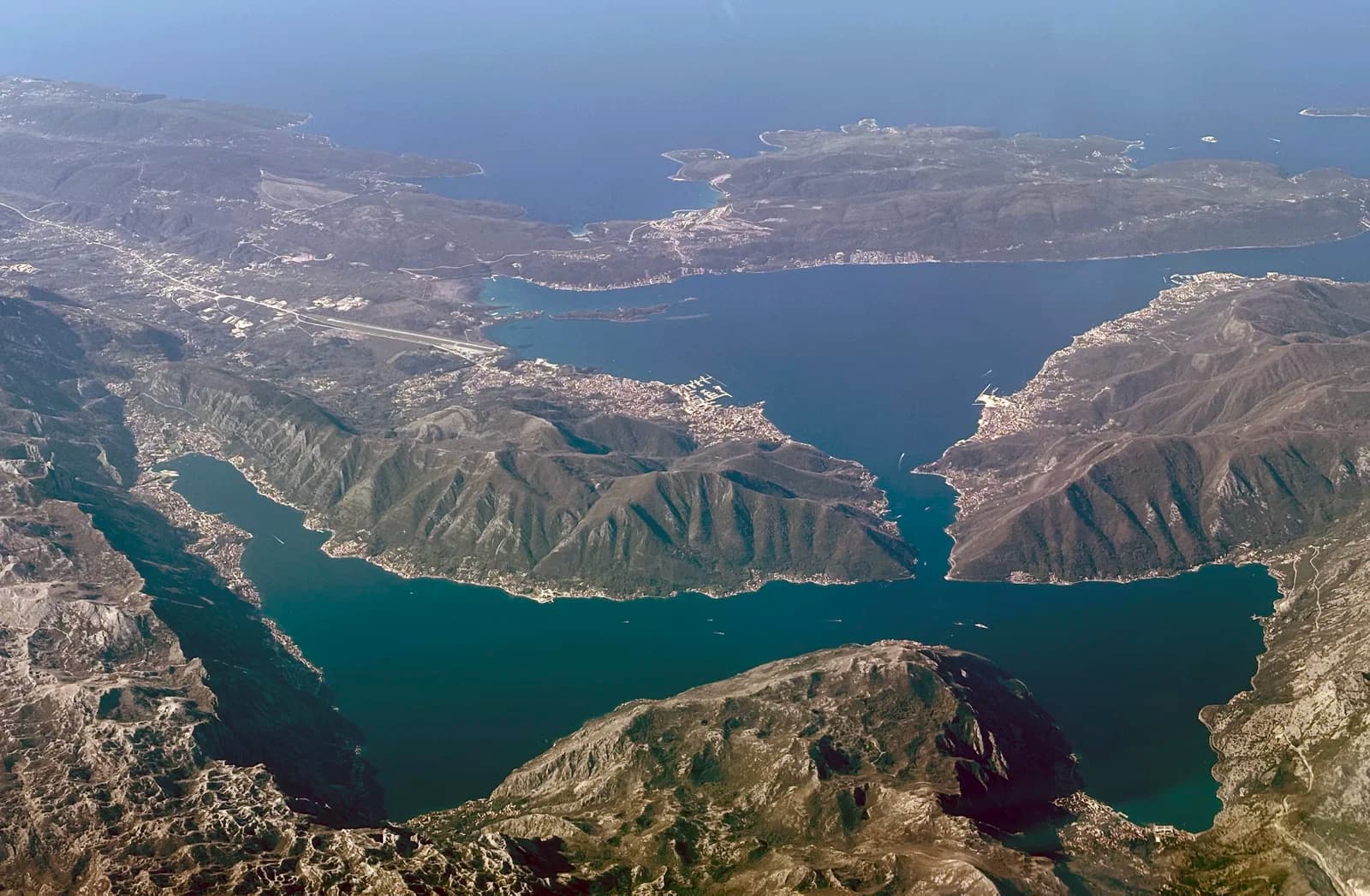
Kotor
Where Mountains Meet the Sea
Hidden at the end of a winding, fjord-like inlet, Kotor is a place of brooding beauty and Venetian history. The limestone cliffs of Mount Lovćen loom almost vertically over the medieval maze of the Old Town, creating a dramatic contrast between the grey stone, the green mountains, and the deep blue sea.
The Boka Kotorska Bay
Approaching Kotor by sea is one of the most dramatic experiences in the Mediterranean. As you sail past the entrance at Prevlaka, the mountains seem to close in around you, rising sheer from the calm, dark waters. This 'fjord-like' bay (Boka Kotorska) is a submerged river canyon of staggering beauty.
Dotted along the shoreline are ancient captain's palaces, baroque churches, and the twin islets of Perast—Our Lady of the Rocks and St. George—which float ethereally in the center of the bay.
Inside the Walls
Kotor Old Town (Stari Grad) is a UNESCO World Heritage site, a maze of cobblestone streets and squares hidden behind high medieval walls. Unlike Dubrovnik's uniformity, Kotor is a chaotic, charming mix of Romanesque, Gothic, Renaissance, and Baroque architecture.
The city is famous for its resident cats, which are considered lucky symbols of the town. You will lose yourself happily in the winding alleys, discovering hidden piazzas like the Square of Arms and the Cathedral of Saint Tryphon, which dates back to 1166.
What to Do
For the active traveler, the hike up to the Fortress of St. John (San Giovanni) is mandatory. It involves climbing 1,350 stairs that zigzag up the mountain face, but the reward is the iconic view over the red roofs and the deep blue bay below.
Take the tender to Perast, a perfectly preserved baroque town a few miles from Kotor. From there, take a local boat to the man-made island of Our Lady of the Rocks (Gospa od Škrpjela), home to a church filled with votive silver plates left by sailors praying for safe voyages.
Ready to visit Kotor by yacht?
Get a tailored route and date recommendation
Tell us your travel window and group style. We will suggest the best itinerary combination and provide a clear quote without broker fees.
Direct owner support with typical response in under 2 hours